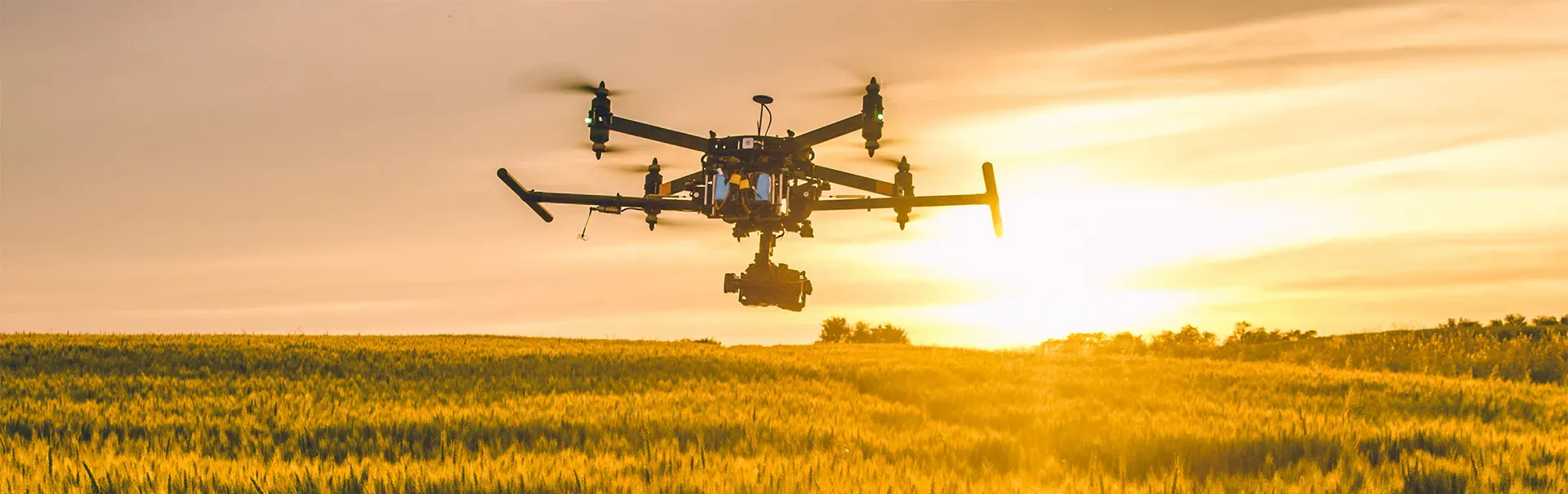
California’s size and crop diversity make it well suited for drone technology. With millions of acres under production, growers need fast ways to monitor crop conditions without relying solely on ground crews. Drones equipped with high resolution and multispectral cameras allow farmers to scan large areas in a short amount of time.
Common uses include identifying irrigation issues, spotting nutrient deficiencies, detecting pest pressure, and locating stressed areas before problems spread. This early visibility allows growers to respond quickly and reduce unnecessary passes through the field.
Search interest around ag drone services in California, farm drone mapping, and crop scouting drones continues to grow as more farmers see real returns from aerial data.
Precision Spraying With Agricultural Drones
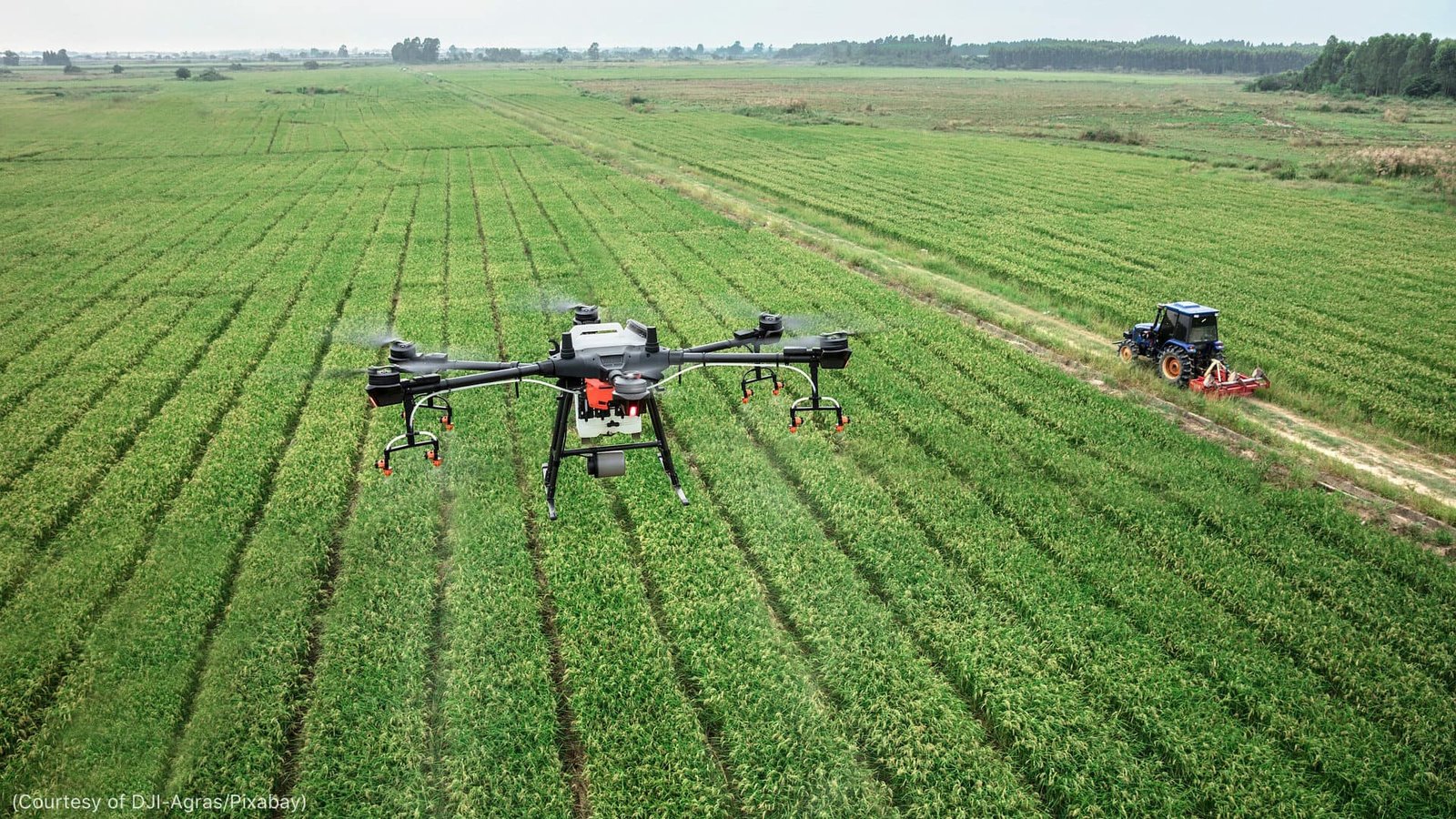
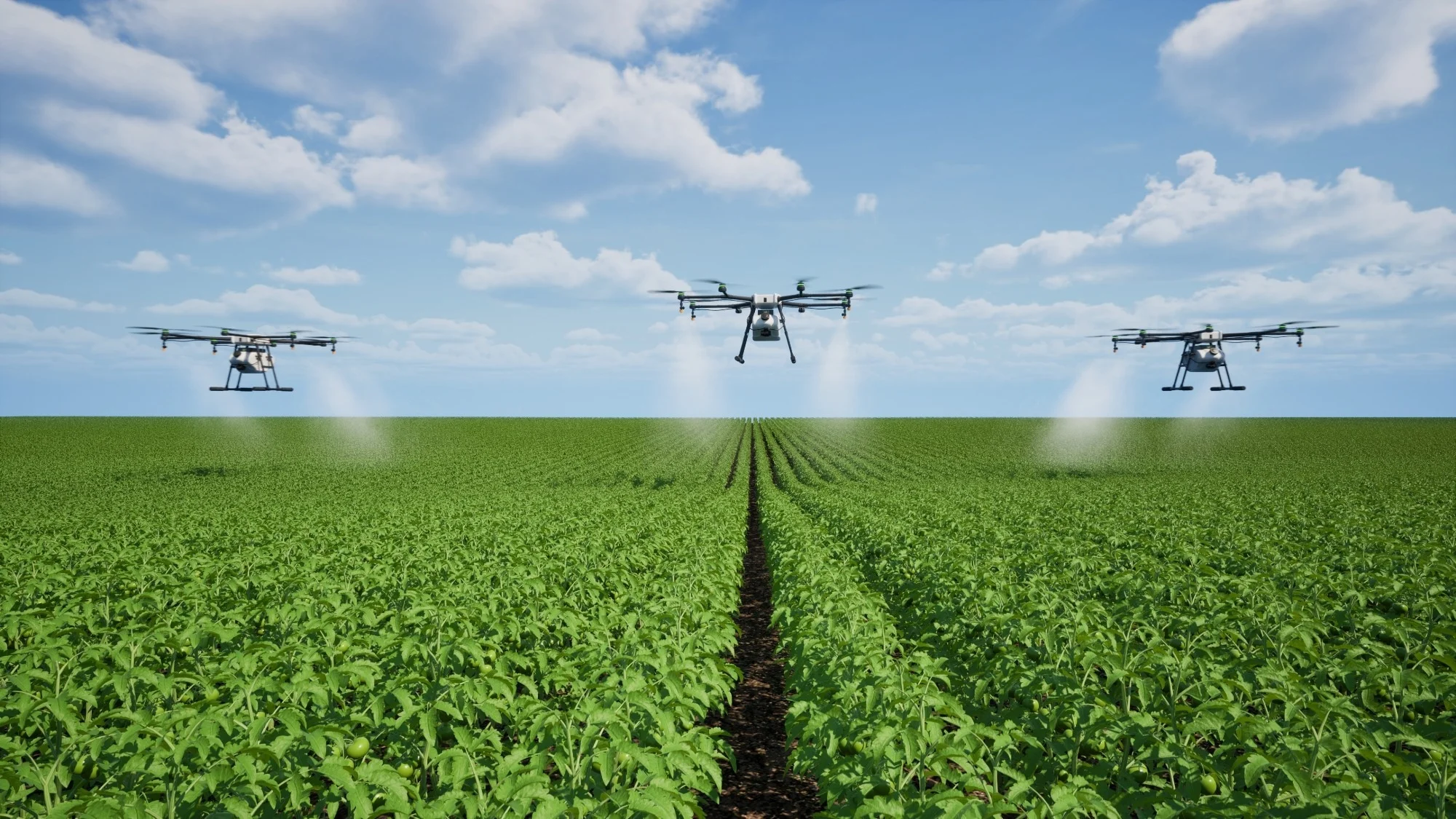
Beyond scouting and mapping, drones are increasingly used for precision spraying. Drone spraying allows targeted applications in areas where ground rigs cannot easily operate, such as wet fields, tall crops, steep terrain, or sensitive orchard blocks.
By applying only what is needed and where it is needed, drone spraying can significantly reduce product use and drift risk. This approach supports both cost control and environmental stewardship. As a result, searches for drone spraying services, ag drone applicators, and crop spraying drones have increased sharply in California.
Regulations for Using Drones in Agriculture
Using drones for agriculture is regulated at the federal and state levels. Any commercial agricultural drone operation must comply with Federal Aviation Administration rules.
To legally operate an ag drone for hire, pilots must hold an FAA Part 107 Remote Pilot Certificate. This certification ensures operators understand airspace rules, flight safety, and operational limits. Drone applicators must also follow all product label requirements and state regulations related to agricultural applications.
California growers are increasingly aware of compliance requirements, which is why searches related to licensed ag drone operators and legal drone spraying are becoming more common.
Training and Certification Requirements
Becoming a certified agricultural drone pilot requires both testing and practical training. Operators must pass the FAA Part 107 exam, which covers airspace classifications, weather, flight operations, and safety procedures.
Many pilots also pursue additional ag specific training through drone schools, extension programs, and manufacturer courses. These programs focus on calibration, application techniques, mapping software, and crop specific use cases. Ongoing education helps ensure drone operations remain safe, effective, and compliant.
Growers hiring drone services should always verify certification, insurance, and experience before scheduling work.
Drones and the Future of Farm Management
Drone technology is not replacing traditional farming practices. Instead, it adds a new layer of information that helps growers make better decisions more quickly. When combined with ground scouting, irrigation management, and agronomy support, drones become part of a more connected and responsive farm system.
As technology improves and adoption increases, drones will continue to play a larger role in California agriculture. Farmers who understand how to use drone data and work with qualified operators will be better positioned to manage risk, control costs, and adapt to changing conditions.
Finding Ag Drone Services Through Agnomy
Agnomy helps California growers connect with licensed and insured ag drone service providers who understand local crops, regulations, and timing. Whether you need crop scouting, mapping, or precision spraying, Agnomy makes it easier to find qualified drone operators and schedule services when they matter most.