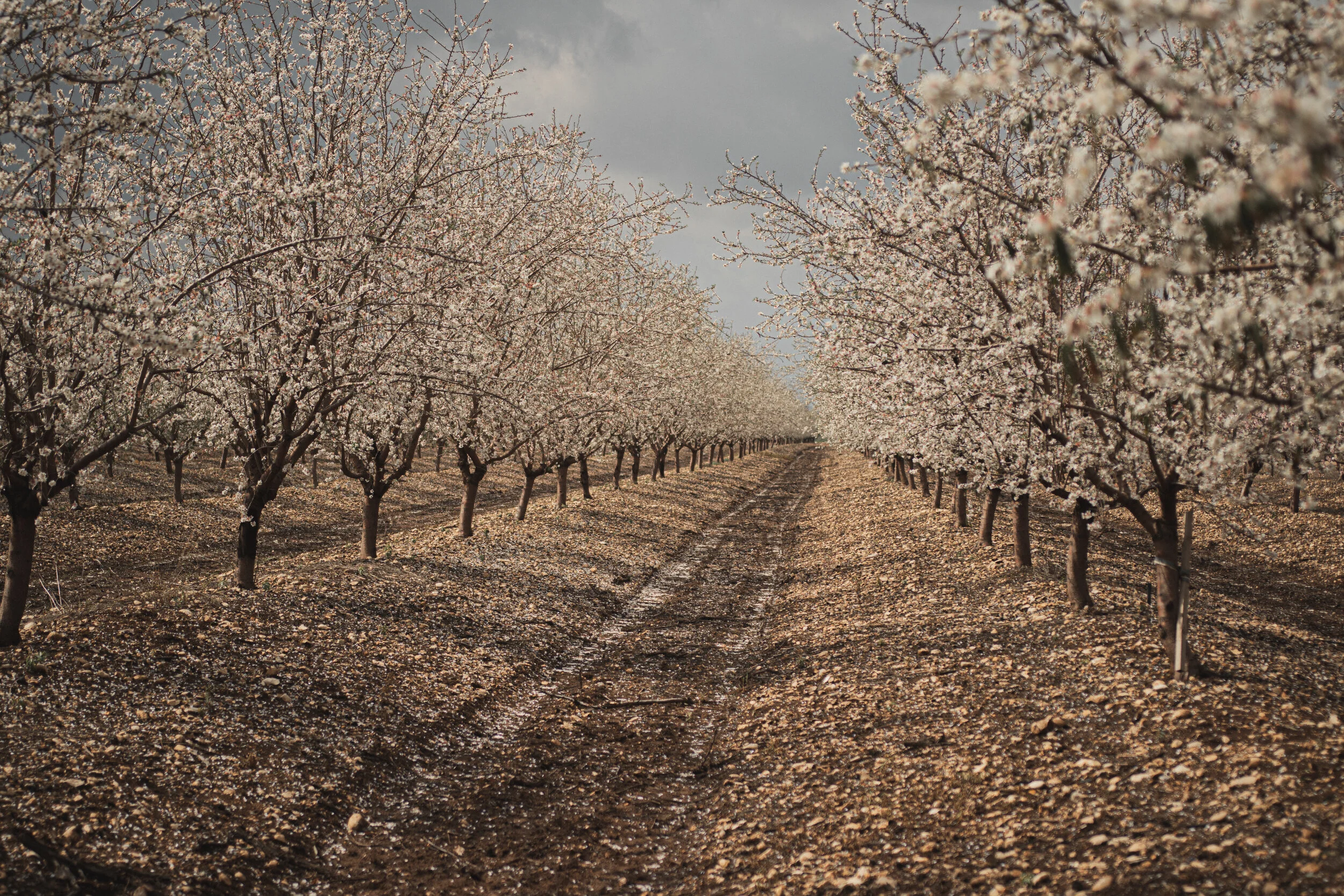
Almond bloom is one of the most important times of the year in California orchards. It sets the foundation for the entire season. What happens during these few weeks determines crop potential long before nuts ever begin to size.
Bloom is not just a visual milestone. It is a management window that requires attention to detail, timing, and coordination. Every decision made during bloom affects pollination, fruit set, disease pressure, and overall orchard health.
With decades of experience in almond production, I can say that bloom is where preparation meets execution.
Understanding the Bloom Window
In California, almond bloom typically begins in early to mid February, depending on variety and region. Early varieties open first, followed by mid and late blooming cultivars. The entire bloom period often lasts two to three weeks, but the most critical pollination window is much shorter.
Weather plays a major role. Temperature, wind, and rainfall directly affect bee activity and pollen transfer. Warm and calm days are ideal. Rain during bloom can disrupt pollination and increase disease risk.
Because bloom timing is tight, growers must be prepared before the first flowers open.
Pollination and Bee Management
Almonds rely heavily on honeybee pollination. Strong hive placement and bee health are essential for a good nut set.
Growers should ensure:
Hives are delivered on time and placed evenly throughout the orchard
Bee strength is monitored and confirmed
Water sources are available nearby
Spray plans are coordinated to protect bee health
Communication between growers, beekeepers, and service providers is critical during bloom. Protecting pollinators protects yield potential.
Disease Pressure During Bloom
Bloom season also increases the risk of certain diseases, particularly fungal issues such as brown rot and blossom blight. Wet weather combined with open flowers creates favorable conditions for infection.
Growers need to closely monitor weather forecasts and apply fungicides when needed within the appropriate timing window. Delays in spraying during bloom can reduce fruit set and weaken the crop.
Spray timing must be precise and carefully managed around bee activity. This requires planning and coordination to avoid unnecessary risk.
Irrigation Management During Bloom
Water management during bloom is often overlooked. Trees require adequate soil moisture to support flower development and early fruit set. However, overwatering can create additional disease pressure or limit oxygen in the root zone.
Growers should review soil moisture levels before bloom begins and make adjustments as needed. Balanced irrigation supports strong bloom and healthy early growth.
Nutrient Considerations
Nutrient management leading into and during bloom affects flower strength and fruit development. Nitrogen, boron, and other micronutrients play important roles in supporting reproductive growth.
Foliar applications are sometimes used during bloom if deficiencies are present, but must be done carefully to avoid interference with pollination.
Pre-bloom nutrient planning is often the difference between uniform nut set and uneven production across blocks.
Monitoring Fruit Set
As bloom progresses, growers begin assessing fruit set. Not every flower will become a nut, but evaluating early set helps guide irrigation and nutrition planning for the rest of the season.
A uniform set across the orchard is a positive sign that pollination, nutrition, and bloom management were effective.
This early evaluation provides insight into expected yield and allows adjustments before the season moves too far forward.
Timing Is Everything During Bloom
Bloom is not a time for scrambling. Equipment must be ready. Crews must be available. Spray materials must be secured ahead of time.
Missed windows during bloom are difficult to recover from. A delayed fungicide application or a gap in pollination coverage can affect yield for the entire year.
Planning reduces risk. Clear scheduling and visibility into service availability help ensure work gets done when conditions are right.
The Importance of Coordination
Almond bloom requires coordination between growers, beekeepers, custom applicators, and field crews. Good communication prevents conflicts between spraying and bee activity. It ensures materials are applied at the correct stage. It keeps work moving when the weather opens a narrow window.
Successful bloom seasons are rarely accidental. They are the result of preparation and execution.
How Agnomy Supports Growers During Bloom
During almond bloom, timing and coordination matter more than ever. Agnomy helps growers connect with qualified service providers for spraying, fieldwork, and orchard support so that critical bloom tasks are scheduled early and managed efficiently.
By planning and maintaining visibility into service availability, growers can reduce last minute stress and protect their crop during the most important window of the season.
Bloom only comes once each year. Being prepared makes the difference.