What’s Actually Happening And Why This Isn’t Just Another Headline
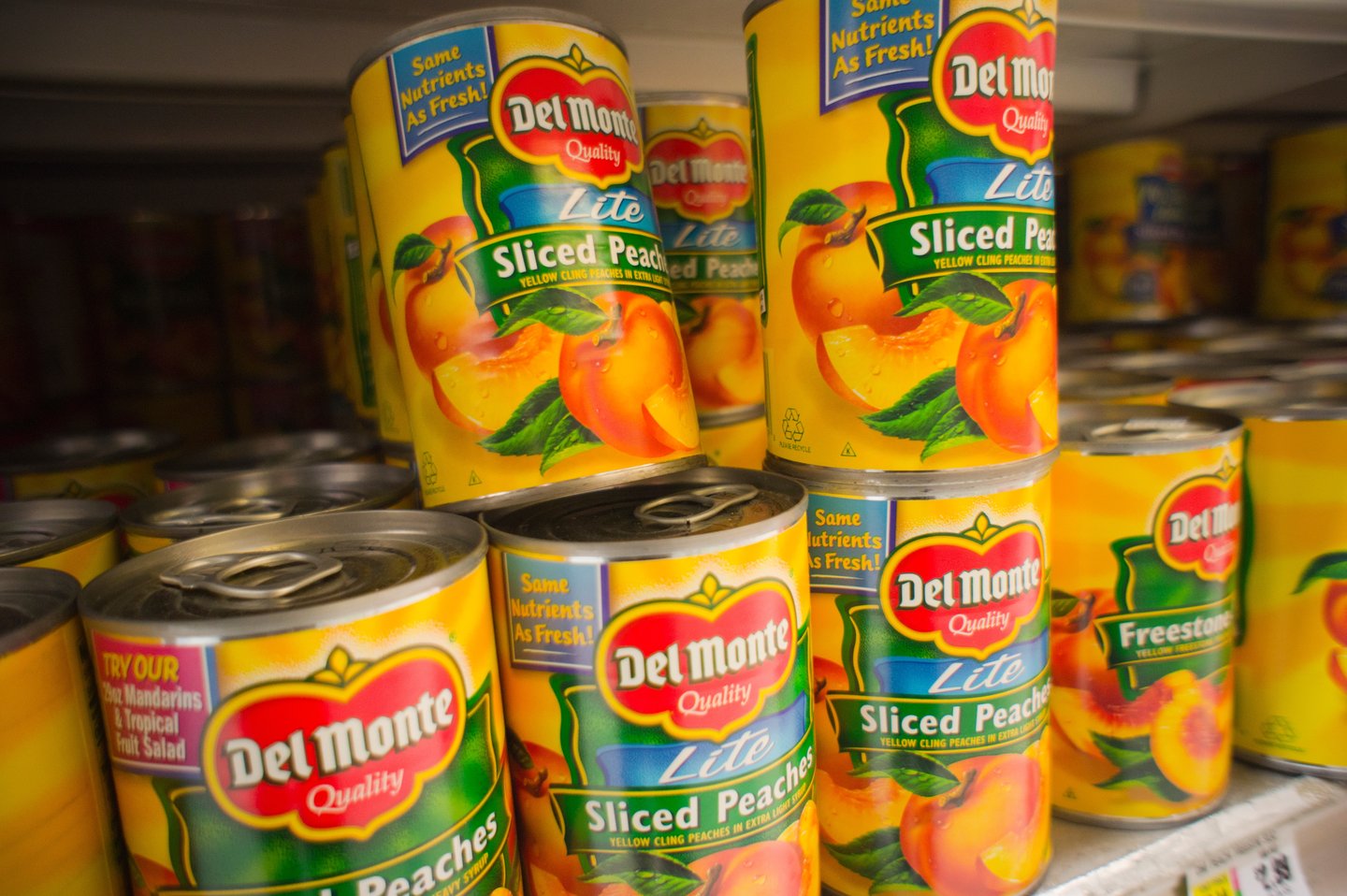
Del Monte Foods filed for Chapter 11 bankruptcy protection after years of financial strain. This didn’t happen overnight.
Over the last five years:
- Interest rates doubled financing costs.
- Consumer demand shifted from canned fruit toward fresh and refrigerated products.
- Steel tariffs increased packaging expenses.
- Transportation, labor, and input costs climbed.
- Private-label competition compressed margins.
The canned fruit business runs on tight margins and high volume. When volume declines and costs rise simultaneously, processors feel it quickly.
The company is now selling assets to multiple buyers, including Fresh Del Monte Produce, B&G Foods, and Pacific Coast Producers, with transactions expected to close by March 2026.
For investors, this is restructuring.
For growers, this is exposure.
When a processor files Chapter 11, it’s not just corporate news. It’s generational decisions. It’s whether you push forward another season or pull trees your grandfather planted.
So the real question is not “What is Chapter 11?”
The real question is:
How exposed am I, and what should I be doing this week?
What This Means for Growers With Existing Contracts
If you have a signed contract for 2026 deliveries, your situation depends on three critical factors:
- Whether your contract is formally assumed during restructuring.
- Whether the buyer of the assets intends to continue your product line.
- Whether your fruit is tied to a specific plant or processing facility being sold.
In a restructuring, contracts are considered “executory contracts.” That means the company can choose to assume (continue) or reject them with court approval.
This creates three possible outcomes for growers:
1. Contract Assumed and Honored
This is the best-case scenario. Deliveries proceed under existing terms, possibly under new ownership.
2. Contract Renegotiated
The processor or acquiring entity may attempt to adjust price, volume, or timing. This often happens if capacity shrinks or SKU lines are consolidated.
3. Contract Rejected
If rejected, you become an unsecured creditor for damages, meaning payment recovery may be partial and delayed.
Right now, the company has secured over $900 million in debtor-in-possession financing to continue operations during the sale process. That suggests plants are expected to run through transition.
But here’s what growers should be actively confirming:
- Has your contract been formally listed as assumed?
- Is your fruit allocated to a facility that is being acquired?
- Has your field rep provided written confirmation?
- What are payment timelines during restructuring?
- Is there any holdback or delayed payment clause triggered?
Do not rely solely on verbal reassurance. Document communication.
Why This Is Different From a Shutdown
A liquidation would mean plants close, equipment is auctioned, and contracts die immediately.
That is not what is happening.
Operations are continuing while assets are sold.
However, restructuring often leads to:
- Capacity rationalization
- SKU consolidation
- Reduced intake volumes
- Stricter quality specifications
- Fewer long-term grower relationships
So even if fruit is taken in 2026, the bigger risk is 2027 and beyond.
That’s why your planning window needs to look at least 24 months out — not just this harvest.
What California Peach Growers Should Be Doing Right Now
If your processing peaches were contracted with Del Monte Foods, the first step is still understanding your direct exposure. Write down exactly how many acres you have committed to Del Monte for 2026, projected tonnage, delivery timing, and which plant your fruit was assigned to. Confirm whether that facility is part of the asset sale and whether it is being acquired by entities like Pacific Coast Producers or another buyer. This isn’t about complex modeling; it’s about knowing precisely how much of your crop is tied to this one restructuring. Once you see that clearly on paper, you can make informed decisions instead of reacting to headlines.
The second move is proactive outreach. Do not wait for final court decisions. Begin reaching out to alternative processors, packing houses, and cooperatives in your region now. Even if capacity is tight, early conversations matter. Explore whether fresh-market diversion is possible for a portion of your crop. Evaluate secondary outlets such as local and regional packers, value-added processors, or short-term spot market opportunities. In some cases, direct-to-consumer, farmers' markets, or regional wholesale channels may not replace full processing contracts, but they can help offset risk on a portion of acreage. The growers who move early to secure backup outlets will be in a stronger position if volume reductions occur.
Finally, stay closely engaged with local, state, and federal agricultural agencies. Situations like this often trigger discussions around emergency relief programs, disaster-style assistance, loan restructuring options, or state-level support for specialty crop growers. Monitor updates from county farm bureaus, commodity boards, and state departments of agriculture. There may be grants, subsidized financing, or transition programs designed to mitigate financial disruption or support crop shifts. The key is staying informed and positioned to apply early if assistance becomes available. In moments like this, information and speed are as important as production.
If Contracts Collapse — What Orchard Transition Actually Looks Like
If no alternative processor steps in, no spot market develops, and contracted volume disappears, orchard removal becomes a real and heavy conversation. But pulling trees is not a quick reset button. It is a multi-stage operational and financial commitment. Removal involves tree extraction, stump grinding, root removal, and often deep ripping to address compaction built up over years of orchard production. From there, soil testing determines whether fumigation or conditioning is necessary before replanting. Each step carries real per-acre costs, and none of it generates revenue. Unlike annual crops, you cannot pivot next season and recover quickly; you are effectively taking acreage offline for a multi-year transition.
Most replacement orchard crops require three to five years before they generate meaningful production, which means several seasons of negative cash flow on that ground. Before making that move, growers need to fully understand the reset they are initiating:
- Total removal and land preparation cost per acre
- Replant cost, including trees, labor, irrigation adjustments, and infrastructure
- Years until break-even cash flow
- Current water allocation realities
- Labor availability for new crop management
Switching crops is not simply replacing one tree with another. It has been restructuring a portion of your balance sheet for years. In a worst-case Del Monte scenario, orchard removal may be necessary for some operations, but it should be a decision made with full awareness of the long-term financial commitment, not as a reaction to short-term uncertainty.
Alternative Crop Considerations
If processing peach demand contracts beyond a single season, growers may need to evaluate structural shifts rather than temporary adjustments. That conversation usually centers on whether the acreage should be converted to another perennial crop, shifted to annual production for short-term liquidity, or left idle while the market stabilizes. Each path has different capital requirements, timelines, and exposure to new market forces, and none is an automatic solution.
Potential alternatives may include:
- Converting to fresh-market peach varieties, if packer relationships and quality standards can be secured
- Transitioning to almonds or walnuts, depending on water reliability and long-term nut market outlook
- Moving into row crops to generate shorter-cycle revenue and preserve flexibility
- Idling acreage temporarily to conserve capital and reassess long-term strategy
However, every option introduces new risk variables:
- Tree nuts remain exposed to global export pricing and oversupply cycles
- Fresh fruit markets require new buyer relationships, marketing channels, and stricter cosmetic standards
- Annual crops demand different equipment, labor planning, and margin expectations
- Water allocations and regulatory pressures may limit viability, depending on the region
Crop transitions should be driven by long-term economics, capital structure, and resource constraints, not by fear or frustration in the middle of industry disruption.
The Bigger Industry Question
Beyond the immediate disruption surrounding Del Monte Foods, a broader structural shift is underway in the food industry. Over the past decade, canned fruit consumption has steadily declined as households move toward fresh, frozen, and ready-to-eat formats. Retail shelf space has tightened. Private-label competition has intensified. Input and packaging costs have climbed. Processing margins have narrowed. The Del Monte restructuring is not an isolated event; it is part of a longer trend affecting the economics of the cling peach sector.
That does not mean cling peaches disappear from California agriculture. It likely means the industry becomes smaller and more consolidated. Fewer processors may control a larger share of capacity. Buyers may operate with tighter margins and more disciplined contracting. Acreage may adjust to better align with true demand. In consolidation cycles like this, the growers who remain strongest are typically those who manage leverage carefully, maintain liquidity, and avoid irreversible decisions made under pressure. Industry shifts are rarely comfortable, but they are survivable for operations built with resilience in mind.
What Matters Most in the Next 90 Days
The next three months are about control, communication, and positioning, not panic. With Del Monte Foods restructuring and asset sales expected to be finalized by March 2026, growers need to stay focused on actions that preserve flexibility and financial stability during this transition window.
- Confirm your contract status in writing and stay in direct contact with plant representatives.
- Proactively explore alternative processors, packers, and secondary market outlets.
- Protect liquidity by limiting non-essential capital spending.
- Stay informed on state and federal relief programs, grants, or loan support tied to agricultural disruption.
- Avoid irreversible decisions, especially orchard removal, until market clarity improves.
The processing industry may be restructuring, but your farm does not need to restructure in panic. The growers who stay disciplined, informed, and flexible over the next 90 days will be best positioned to navigate whatever consolidation looks like on the other side.