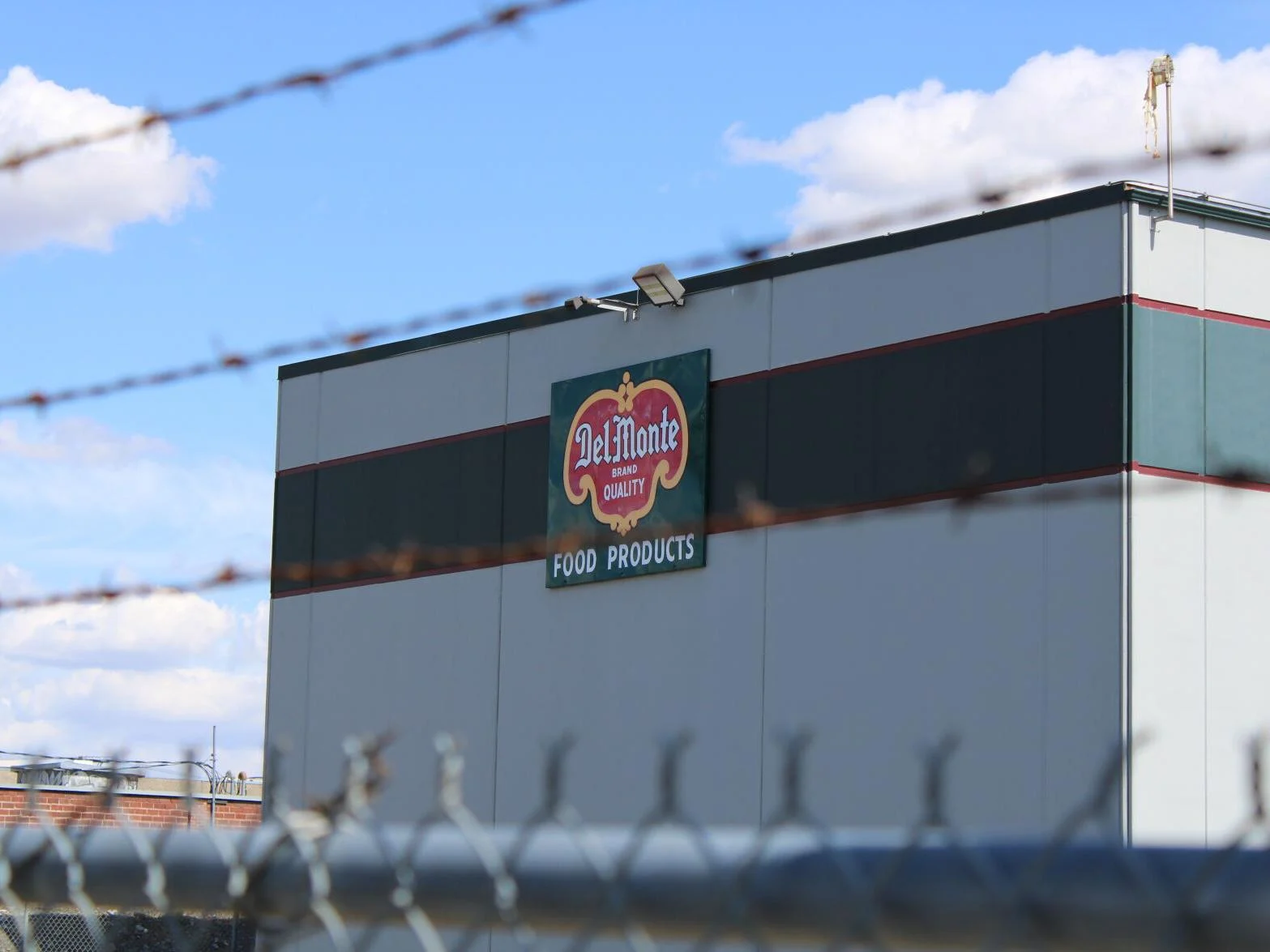
Since the initial news around Del Monte’s restructuring, there has been a major development that gives more clarity on where things are heading.
At a high level, this confirms what many in the industry expected. The business is not disappearing, but it is being reorganized and redistributed across different operators.
For growers, the real question has always been less about Del Monte as a brand and more about who will process the fruit and under what terms moving forward.
What Actually Happened in the Sale
Del Monte completed multiple transactions across its business segments, including shelf stable products and fruit processing operations.
One of the most important outcomes is that key processing assets and brands are now being operated under new ownership structures, with a focus on maintaining production continuity.
This signals that while ownership has changed, there is still strong value in maintaining the brand and continuing product distribution.
For consumers, not much changes.
For growers, everything depends on who is actually buying and processing fruit.
Where Pacific Coast Producers (PCP) Fits In
Pacific Coast Producers has emerged as a key player in the transition, especially in California's processing capacity.
PCP is a grower owned cooperative with deep roots in California’s processing fruit industry. They already operate multiple facilities and have longstanding relationships with growers across the state.
The reported deal structure indicates that PCP has taken on processing assets and operational responsibilities for fruit handling and production, particularly in categories such as cling peaches.
What this means in practical terms:
- PCP is expanding its role as a primary processor
- Existing infrastructure is being absorbed rather than shut down
- Grower relationships are likely to be restructured
This is not a startup stepping in. This is an established operator increasing its footprint.
What This Means for Peach Growers
The biggest concern when the Del Monte situation first surfaced was whether processing capacity would disappear altogether. For cling peach growers, that is always the first question. If there is no place to deliver fruit, nothing else matters.
At this stage, it appears that capacity is not disappearing, but it is being consolidated into fewer hands. Facilities are being absorbed and operated under more centralized control rather than being shut down across the board. That is a much better outcome than a complete loss of processing, but it still represents a meaningful shift in how the market will function moving forward.
When processing consolidates, the market balance changes. Growers move from having multiple potential outlets to working within a tighter system in which fewer buyers control a larger share of volume. That changes leverage, expectations, and decision-making on both sides.
In practical terms, growers should expect:
Fewer buyers overall
The number of processors competing for fruit is reduced, which limits optionality when negotiating contracts or finding a home for production.
More centralized contract negotiations
Instead of regional or plant level flexibility, contracts are more likely to be standardized across a larger system with less room for adjustment.
Stricter quality and delivery requirements
Processors operating at scale tend to tighten specifications to maintain efficiency, which can impact acceptance rates and grading outcomes
Potential shifts in pricing structures
With fewer buyers and more control over supply, pricing may become more disciplined and tied closely to market conditions rather than negotiated flexibility
When there are fewer processors, those processors tend to operate with tighter margins and more discipline. They are managing larger systems, higher volumes, and more risk, which leads to more controlled decision making.
This does not mean there is no market for cling peaches. Processing demand still exists, and facilities are still running. What it does mean is that the market becomes more selective.
Growers who consistently meet quality standards, maintain strong relationships, and operate efficiently will continue to find opportunities. Those who rely on flexibility, spot decisions, or marginal production may find the environment more challenging moving forward.
The shift is not about whether the industry exists. It is about how it operates from here on out.
The Bigger Shift Happening in Processing Agriculture
This situation is not isolated to Del Monte. What is happening here is part of a much broader shift that has been developing across processing agriculture for years.
In crops that rely on processing infrastructure, such as peaches, tomatoes, olives, and other specialty crops, the industry has been gradually moving toward fewer, larger operators. Rising costs, tighter margins, and increasing operational complexity have made it more difficult for smaller processors to compete or remain independent.
Processing facilities are expensive to operate. Labor, energy, compliance, and maintenance costs have all increased significantly. At the same time, processors are expected to run efficiently at scale while maintaining consistent quality across large volumes. That environment naturally favors consolidation.
As a result, the industry is shifting toward:
Consolidation of processors
Facilities and operations are being combined under fewer organizations that can manage scale and absorb higher operating costs.
Fewer but larger buyers
Growers are increasingly working with a smaller number of processors that control a larger share of the market.
Tighter contract structures
Processors are placing more emphasis on structured agreements to ensure supply stability and manage risk.
More controlled supply chains
From field to processing to distribution, the system is becoming more coordinated and less flexible.
Greater emphasis on efficiency
Processors are optimizing throughput, timing, and logistics to maximize plant performance.
More disciplined acreage management
Processors are working more closely with growers to align planted acreage with actual demand.
For crops like cling peaches, this trend has been building for a long time. The number of processing facilities has gradually declined, and the remaining operators have become more centralized.
The Del Monte transition did not create this shift. It accelerated it.
What might have taken several more years to unfold is now happening in a much shorter window. That forces faster adjustments across the industry, both for processors and for growers.
For growers, the takeaway is that processing agriculture is becoming more structured and more coordinated. Flexibility is being replaced by planning. Spot decisions are being replaced by longer term alignment.
Understanding that shift is key to navigating what comes next.
What Growers Should Be Thinking About Now
This is the part that matters most. Not what happened, but what to do next.
The situation has shifted from uncertainty to a more defined structure, and now it becomes about positioning. Growers who take the time to understand how the new landscape operates will be in a much better position than those who wait for things to settle on their own.
The biggest change is that decision making needs to become more deliberate. With fewer buyers and more centralized processing, there is less room for last minute adjustments or relying on backup options.
In a more consolidated market, relationships carry more weight. Consistency, reliability, and communication matter more
Where This Leaves the Industry
The Del Monte situation created uncertainty early on, but the outcome is beginning to look more structured than chaotic.
Processing is continuing. Facilities are still operating. Fruit is still moving through the system. The difference is in how that system is now organized.
The industry is clearly becoming more consolidated.
And consolidation changes how growers operate.
Instead of a more open market with multiple buyers competing, the system becomes more coordinated. Supply is managed more closely. Contracts become more structured. Expectations become more defined.
The farms that navigate this well will be the ones that:
Stay disciplined with costs
Operations that understand and control their cost structure will be better positioned as margins tighten
Maintain strong processor relationships
Reliability, communication, and consistency will carry more value in a consolidated system
Avoid overextending based on past market conditions
Decisions should be based on current realities, not previous cycles when conditions were different
Align production with realistic demand
Planting and orchard decisions should reflect what the market can actually absorb
Focus on operational efficiency
Reducing waste, improving timing, and tightening execution will make a bigger difference
The industry is not breaking down. It is reorganizing into a more structured system that rewards efficiency and consistency.
Final Thought
At this point, there is still uncertainty about what comes next.
While the transactions have been completed and operations are continuing, there is not enough information yet to fully understand how the new leadership and ownership structure will manage the business moving forward. The long term approach to contracts, pricing, and grower relationships is still taking shape.
For cling peach growers, that means this is a period of waiting and watching. The market's direction is not fully defined yet.
What does seem clear is that there will be a shift.
There will likely be changes in how demand is structured, how contracts are handled, and how supply is managed across the industry. The question is not whether things will change, but how those changes will play out over time.
For now, growers should stay close to their buyers, pay attention to how decisions unfold over the next season, and remain flexible in their planning.
The industry is still moving forward, but the full picture has not yet been revealed.