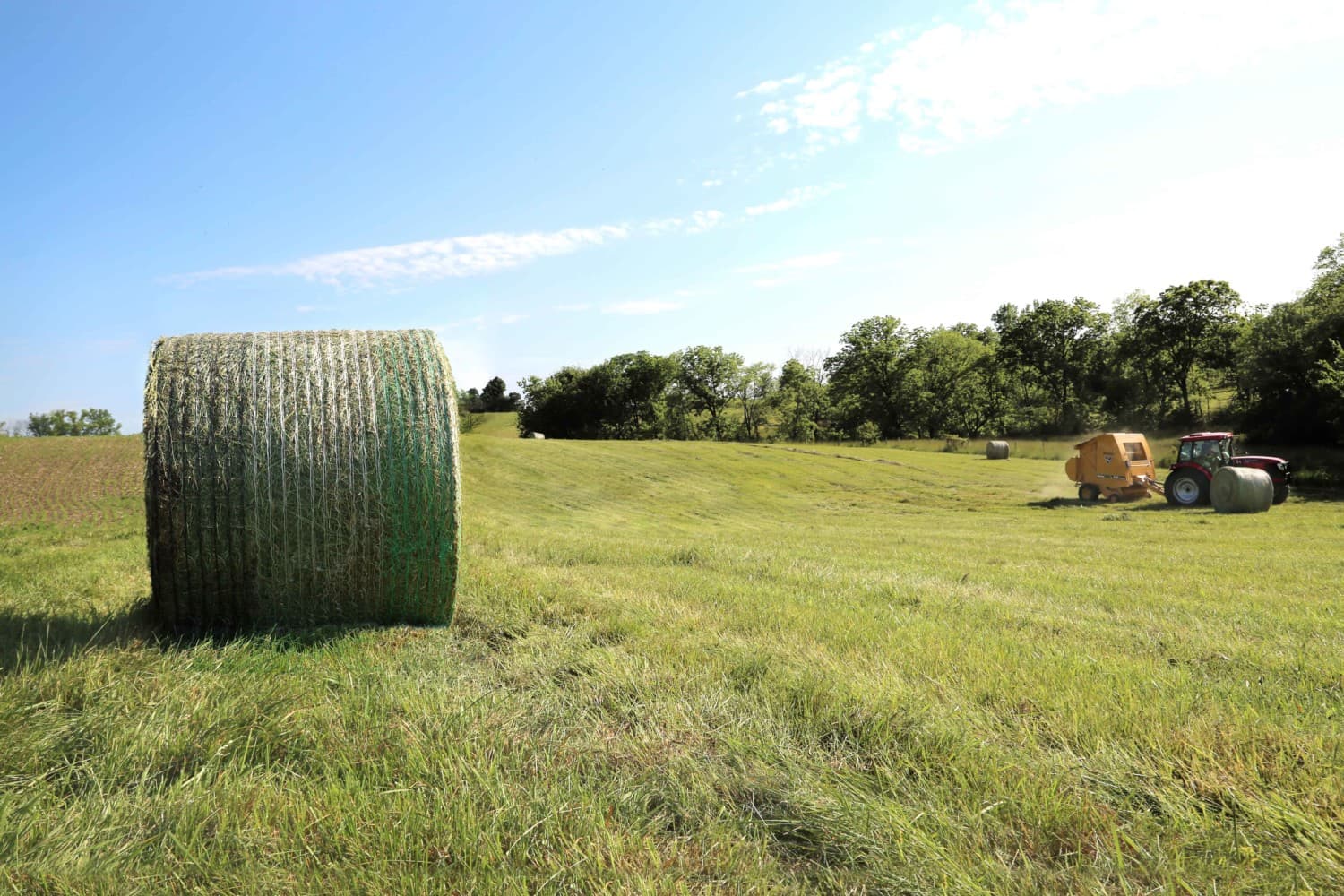

Bale wrapping seals high-moisture bales in plastic so they ferment into baleage instead of drying as hay. It lets growers put up forage in a much shorter weather window, which is a real advantage on first cutting, in wet regions, and for dairy and livestock feed where high-moisture forage feeds better.
Wrapping has to be timely and airtight. Bales are best wrapped soon after baling with enough layers of stretch film to exclude oxygen, using individual wrappers for stack-anywhere bales or inline tube wrappers for high throughput. Good wrapping means clean fermentation, low spoilage, and forage that holds through storage; gaps or delays let air in and cause mold and heating.
Priced per bale. Pairs with custom baling, and operators can wrap right behind the baler to keep the window tight.