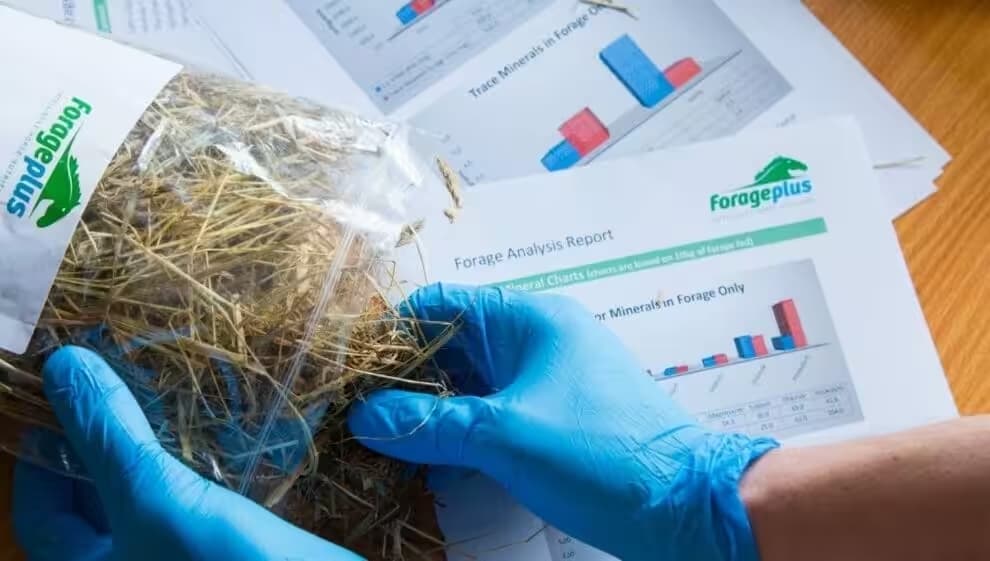
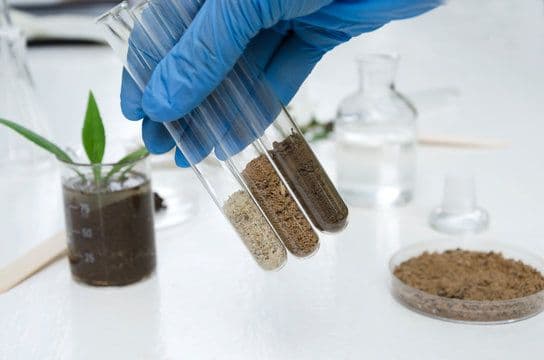
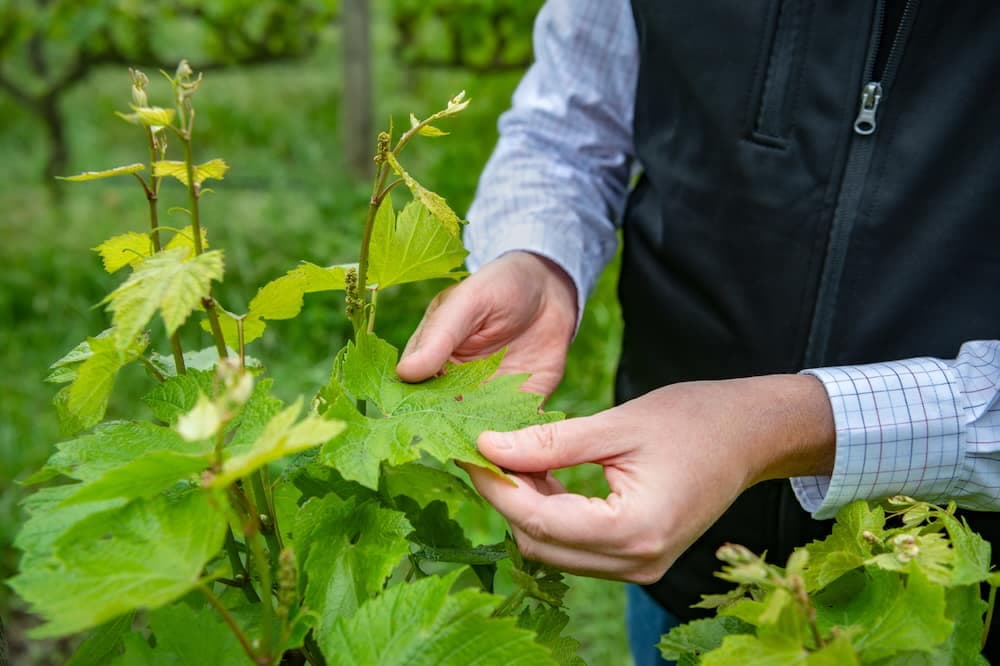

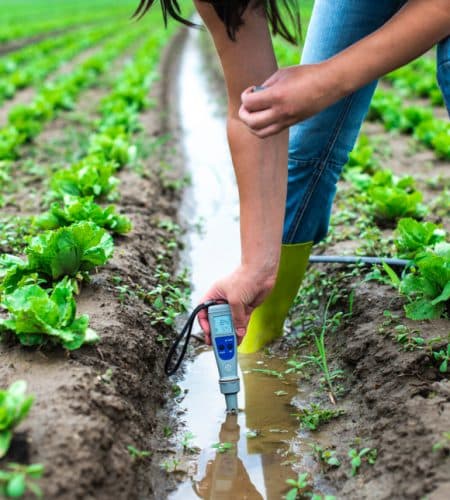
Forage and hay analysis is lab testing that tells you what your feed is actually worth. A certified forage lab measures crude protein, energy (TDN), fiber (NDF and ADF), moisture and dry matter, and relative feed value or quality (RFV / RFQ), the numbers that set hay grade, ration balance, and sale price. Testing is done by wet chemistry for the reference-grade result or by NIR for fast, low-cost turnaround.
The same panel flags feed-safety risks. Nitrate testing on drought-stressed small grains, sorghum, and sudangrass, and mineral and mycotoxin screens on stored forage, catch problems before feed reaches livestock. For growers selling hay, a current test sheet is what buyers and brokers expect, and it turns "good hay" into a documented, priceable product.
Sampling matters as much as the lab: a core probe pulling from many bales or a representative silage grab gives a result that reflects the lot. Providers can pull and submit samples, interpret the report against your feeding or marketing goal, and track quality cutting to cutting. Priced per sample or per panel.