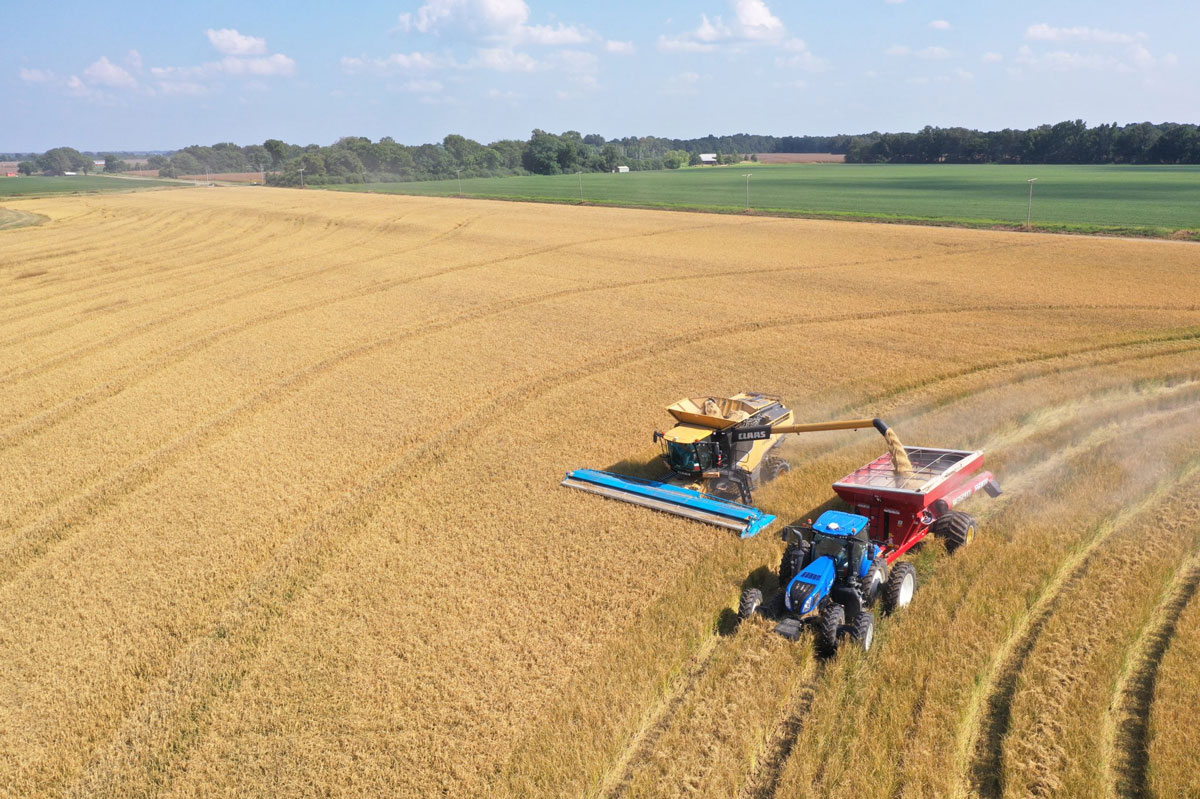
Rice harvest is moving across the country, and this year’s crop is shaping up very differently from the last few seasons. From Texas and Louisiana, where harvest starts earlier, through Arkansas, Mississippi, and Missouri, and eventually into California’s Sacramento Valley, growers are moving into one of the most important parts of the year.
The biggest story going into the 2026 harvest is not necessarily what’s happening in the combine. It’s how much less rice there is to harvest. U.S. growers planted considerably fewer acres this year after dealing with weaker prices, high production costs, and a difficult export market. USDA’s latest forecast puts the 2026 crop at just 158.4 million hundredweight (cwt), the lowest U.S. rice production in 33 years.
That smaller crop is beginning to change the market outlook. Supplies are tightening, projected ending stocks are falling, and USDA is forecasting a higher average farm price for the 2026/27 marketing year. For growers who made it through another expensive production season, that is welcome news, but a smaller crop does not automatically mean an easy or profitable year.
U.S. Rice Acreage Dropped Sharply in 2026
Growers started signaling the change before planting even began. USDA’s March Prospective Plantings report showed farmers intended to plant about 2.32 million acres of rice in 2026, down 18% from 2.81 million acres in 2025. The biggest reduction was in long-grain rice, where intended acreage fell from roughly 2.12 million acres last year to 1.65 million this year.
The reductions were particularly significant in the Mid-South. Arkansas growers initially intended to plant about 1 million acres compared with 1.28 million in 2025. Mississippi’s intentions dropped from 164,000 acres to only 80,000, while Missouri, Louisiana and Texas were all expected to reduce acreage as well. California was much steadier because its crop and market are different, with the state predominantly producing medium-grain rice.
As the growing season progressed, USDA adjusted some of those estimates, but the overall story did not change. This is a much smaller U.S. rice crop.
The 2026 Crop Could Be the Smallest in More Than Three Decades
USDA’s August Rice Outlook currently forecasts 158.4 million cwt of production for 2026/27, despite raising the estimate by 5.1 million cwt from its previous forecast. Even with that increase, USDA says production remains at a 33-year low.
Arkansas remains by far the country’s largest rice-producing state. USDA currently estimates about 886,000 harvested acres, averaging 7,450 pounds per acre and producing roughly 66 million cwt. Louisiana is projected to have 398,000 harvested acres and produce about 26.5 million cwt.
California is expected to harvest about 508,000 acres, with an average yield forecast at 8,700 pounds per acre. That would produce roughly 44.2 million cwt, making California an especially important part of the national crop this year as acreage holds up better than in the long-grain producing states.
Mississippi shows just how dramatic the acreage adjustment has been. USDA currently estimates only about 50,000 harvested rice acres in the state, with production around 3.7 million cwt.
Rice Harvest Is Already Moving Across the South
Rice harvest is not one national event that starts on the same day. By the time California growers are getting combines into fields, growers farther south may already have harvested a significant portion of their crop.
Louisiana and Texas are typically among the first major rice areas to begin harvest. Arkansas, Mississippi and Missouri follow as the season progresses north, while California’s Sacramento Valley generally moves into harvest later. That geographic spread makes September an interesting month because harvest can be well underway in one part of rice country while another region still prepares equipment and watches grain moisture.
The timing also changes the problems growers face. Gulf Coast producers must consider weather and hurricane exposure, while growers farther north may be watching fall rain. In California, the crop, varieties, climate, and post-harvest practices create an entirely different set of considerations.
Regardless of location, once rice reaches the point where it needs to come out, having equipment, trucks, operators, drying and storage lined up becomes increasingly important.
The Rice Market Is Starting to Respond to the Smaller Crop
This is where 2026 gets particularly interesting.
USDA currently forecasts total U.S. rice supplies for 2026/27 at 262 million cwt, which is about 14% below the previous year. Ending stocks are projected at only 36 million cwt, down 33% from last year and the lowest in four years.
That tighter supply is beginning to show up in the price outlook. USDA currently forecasts the 2026/27 all-rice season-average farm price at $14.90 per cwt, compared with $12.50 for 2025/26. That is a $2.40 increase, or roughly 19% year over year.
U.S. Rice Market | 2025/26 | 2026/27 Forecast |
All-rice farm price | $12.50/cwt | $14.90/cwt |
2026 production | 158.4M cwt | |
Total 2026/27 supply | 262.0M cwt | |
2026/27 exports | 78.0M cwt | |
2026/27 ending stocks | 36.0M cwt |
Those numbers are encouraging, but growers know better than to look at price alone. The cost of producing an acre of rice still matters, and a higher price does not necessarily make up for fewer harvested acres, lower yields, or higher expenses for water, fertilizer, fuel, labor, and equipment.
Long-Grain and California Rice Are Different Markets
Talking about a single “rice price” can also be misleading because U.S. rice is not one uniform market.
Arkansas, Louisiana, Mississippi, Missouri, and Texas predominantly produce long-grain rice. California’s industry is heavily concentrated in medium-grain production, particularly Calrose, with smaller amounts of short- and long-grain rice. Those crops serve different markets and can have very different supply, demand, and pricing situations.
That difference is especially visible in this year’s acreage. USDA’s original 2026 planting intentions had U.S. long-grain acreage falling about 22%, from 2.12 million acres to 1.65 million. Medium-grain acreage was expected to decline only about 3%, with California accounting for most of that production.
For growers, a national headline saying rice supplies are tightening tells only part of the story. What matters on the farm is the market for the type of rice you actually grow, the buyers available in your region, and the price being offered for that crop.
Exports Are Still One of the Biggest Questions
The other part of the market I would be watching closely is exports.
Earlier this year, USDA reported that U.S. long-grain rice faced significant competition in Latin America from South American suppliers, particularly Brazil, Argentina, and Uruguay. Mexico has been an especially important concern. During part of the 2025/26 marketing year, U.S. rice shipments to Mexico were down more than 50% compared with the same period a year earlier.
By June, USDA reported that U.S. suppliers accounted for roughly 40% of Mexico’s rice imports so far in the 2025/26 marketing year, compared with approximately 85% in 2021/22. Brazil and Uruguay had gained business as buyers responded to competitive prices and quality preferences.
Prices have become more competitive. USDA noted that U.S. long-grain export quotes had fallen from around $650 per metric ton in June 2025 to approximately $534 per metric ton in early June 2026. That helps U.S. rice compete, but rebuilding export share doesn't happen overnight.
For the 2026/27 marketing year, USDA currently forecasts total U.S. rice exports at 78 million cwt. That makes exports one of the numbers worth watching as this smaller crop moves through the market.
A Smaller Crop Doesn’t Make Harvest Any Less Complicated
Once the crop is ready, market forecasts take a back seat to getting rice out of the field.
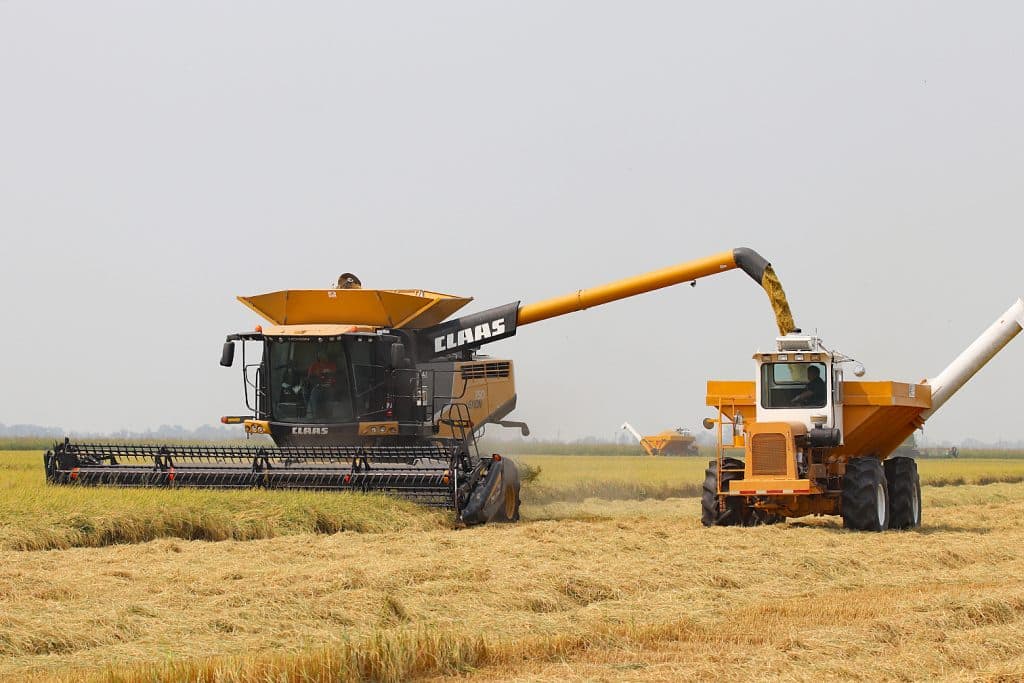
Rice harvest involves much more than putting a combine in a field. Combines need to keep moving, grain needs to get out of the field, trucks need to be available, dryers need capacity, and equipment has to stay running. A bottleneck anywhere in that chain can slow down the entire operation.
Grain moisture and field conditions add another layer. Waiting can sometimes improve one part of the harvest equation while increasing risk somewhere else. Weather can change, rice can lodge or shatter, and harvest losses can increase. Every operation has its own balance depending on varieties, equipment, drying costs, field conditions and where the crop is headed.
That is why preparation before harvest matters as much as combine capacity. Knowing where the grain is going, how it gets there, and what happens if a truck, combine, or other piece of equipment goes down can save a lot of scrambling once harvest is underway.
Harvest Is More Than Running the Combine
People tend to think of custom rice harvest as simply hiring a combine, but anyone who has been around harvest knows there is a whole chain of work behind it.
Combining, grain carts, trucking, drying, and storage all have to work together. Equipment repair and fuel have to keep up with the operation. Depending on the farm and region, field work can also follow harvest immediately.
For growers who don't own all that capacity internally, custom agricultural services become an important part of getting the crop out on time. That can include custom harvesting, equipment operators, trucking and hauling, mobile repair, field work, and other seasonal services.
It does not matter how much combine capacity you have if there is nowhere for the rice to go.
California Rice Harvest Has Its Own Story
California deserves its own discussion because its rice industry operates differently from much of the Mid-South.
USDA currently forecasts that California growers will harvest about 508,000 acres in 2026, producing approximately 44.2 million cwt. The state’s forecast yield of 8,700 pounds per acre is considerably higher than the current national averages in many Southern rice states.
Most California rice is grown in the Sacramento Valley, and medium-grain Calrose dominates production. That puts California growers in different domestic and international markets than long-grain producers in Arkansas, Louisiana, or Texas.
California harvest also leads directly into another important part of the production cycle: rice straw and winter field management. Depending on the operation, growers may chop or incorporate straw, work fields, manage water, and prepare acreage for winter flooding. Those flooded rice fields also play an important role in Sacramento Valley waterfowl habitat.
For California growers, the combine leaving the field is not necessarily the end of the season. It is often the beginning of the next round of fieldwork.
What I’d Be Watching During the 2026 Harvest
Every rice operation is different, and growers do not need someone on the internet telling them how to harvest their crop. What is worth discussing are the bottlenecks that can become expensive once the crop is ready.
Equipment availability would be high on my list, particularly for operations relying on custom harvesters. Trucking and drying capacity matter just as much. I’d also watch the weather closely and make sure repair options are available before something breaks, not after.
The market deserves attention too. With national supplies tightening and USDA forecasting higher prices, growers should understand their local basis, contracts, storage options, and what buyers are doing rather than relying only on the national season-average price.
A smaller national crop can improve the overall supply picture, but what matters to an individual farm is still the crop coming across its own scale and the price that crop actually brings.
What Happens After Rice Harvest?
Harvest does not necessarily mean the work is finished. Depending on the region and production system, fields may need straw management, tillage, drainage work, leveling, ratoon management, winter flooding, or preparation for the next crop.
Equipment also needs attention. Combines, carts, tractors, and trucks that have been running hard through harvest eventually need cleaning, maintenance, and repairs. Problems patched together to finish the season can become bigger problems if you forget them until next year.
This is also when growers start getting a much clearer picture of what the year actually looked like. Final yield, drying costs, harvest losses, trucking, input expenses, and the price received ultimately matter more than any preseason projection.
Could a Smaller Crop Bring the Rice Market Back Into Balance?
That may be the biggest question heading into the rest of the 2026/27 marketing year.
On paper, the supply side has changed considerably. Production is at a 33-year low, total supplies are down 14%, ending stocks are projected to fall 33%, and USDA’s average farm price forecast is nearly 20% higher than last year.
That kind of correction can help work through excess supply. But there are still reasons to be cautious. USDA is forecasting record imports of 49.8 million cwt, while U.S. exporters continue to face aggressive competition in important foreign markets.
The real test will be what happens after this crop is harvested. If tighter supplies strengthen prices while domestic and export demand remain healthy, growers could head toward 2027 with a considerably different market than they faced going into 2026. If export demand remains weak or imports continue taking a larger share of the market, the smaller crop may not solve every problem.
Either way, acreage decisions for 2027 are worth watching.
Final Thought
The 2026 rice crop is a good reminder that agriculture can change quickly. Growers entered the year after dealing with weaker prices and high production costs, and many responded by planting fewer acres. Now the country is looking at its smallest rice crop in more than three decades and a considerably tighter supply outlook.
That does not guarantee a profitable year. Yield, quality, input costs, harvest expenses and the price each grower actually receives will determine that. Export competition also remains a real concern, particularly for the long-grain market.
But tighter supplies and a higher USDA price forecast are at least movement in the right direction. Right now, the focus is getting the crop out efficiently, keeping equipment moving, and getting rice where it needs to go. Once the dust settles, we’ll have a much better idea of whether this year’s acreage correction was enough to put the U.S. rice market on firmer ground heading into 2027.
Need Help During Rice Harvest?
Rice harvest depends on more than a combine. Custom harvesting, trucking and hauling, equipment operators, mobile repairs, field work, straw management, and other agricultural services all have to come together during a relatively narrow window.
Agnomy helps growers find agricultural service providers for the work they need throughout harvest and after the crop comes off. Whether you need additional harvesting capacity, trucks, equipment work, or help getting fields ready for what comes next, the goal is to make it easier to find the right agricultural services when the work needs to get done.